Home / Services / Attic Insulation
Residential & Commercial
Attic Insulation Hamilton
The attic is where most Hamilton houses lose the most, and in this climate the fault is usually air moving through the ceiling rather than heat passing through the insulation.
Where a Hamilton Attic Loses Its Money
The heating season here runs long enough that small continuous losses accumulate into a large number, and the dominant path is not conduction through insulation but air moving through gaps at the ceiling plane: around pot lights, at top plates, through plumbing chases and an unsealed attic hatch. Material lying above those gaps slows heat transfer while leaving the air exchange exactly as it was.
Lake-Effect Damp and the Roof Deck
Warm indoor air carries moisture, and where it escapes into a cold attic that moisture condenses on the underside of the roof sheathing. Close to Lake Ontario the air is humid for a large part of the year, which makes that condensation a building-condition issue as much as a comfort one. An attic can hold the full rated depth of insulation and still have a moisture problem, because depth was never what controlled it.
Century Homes Have Awkward Attics
A great deal of Hamilton's older stock was built with rafters rather than modern trusses, often with knee walls, dormers or a partly finished third storey. In those houses the conditioned space extends up into the roof structure, so material on the attic floor does very little and the insulation has to follow the roof line instead. That is a different scope from a floor fill and should be priced as what it is.
What the Finished Work Should Show
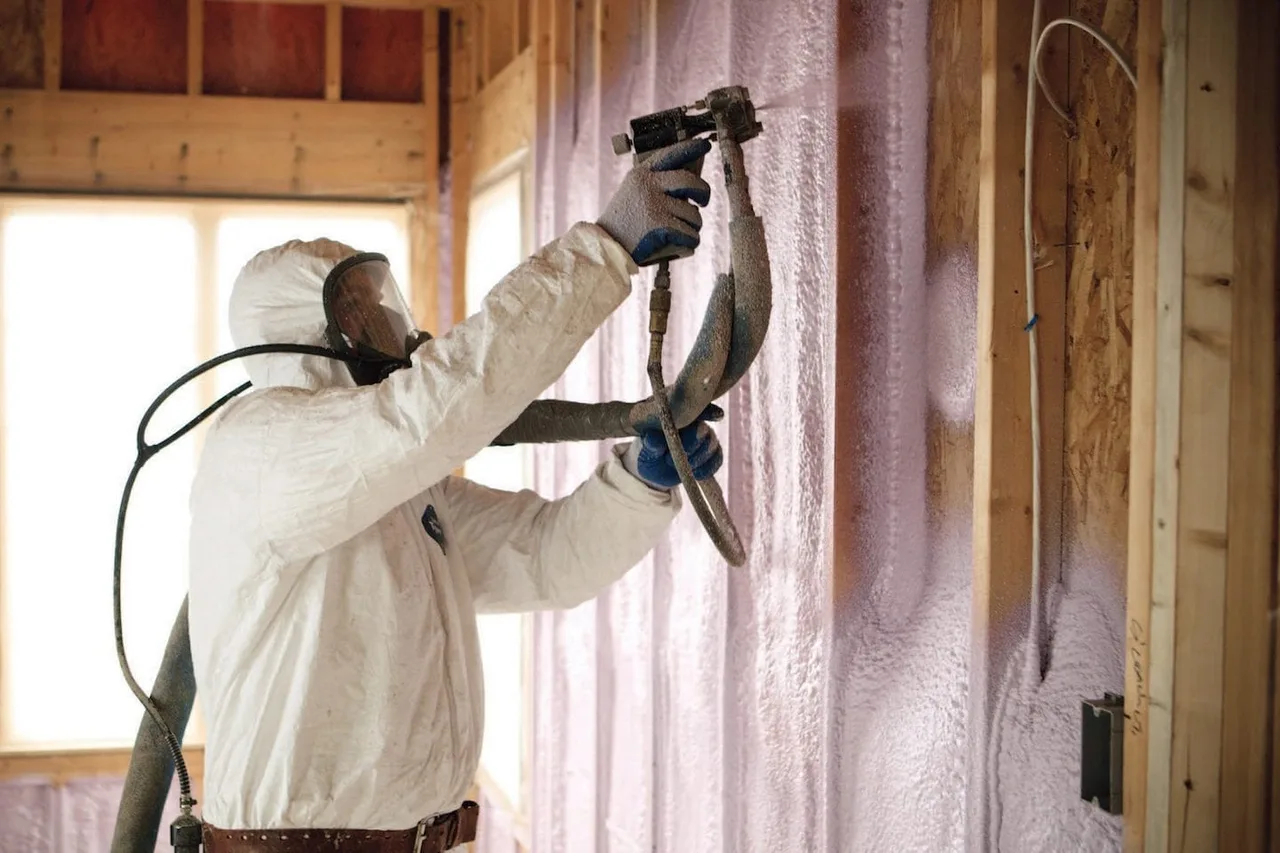
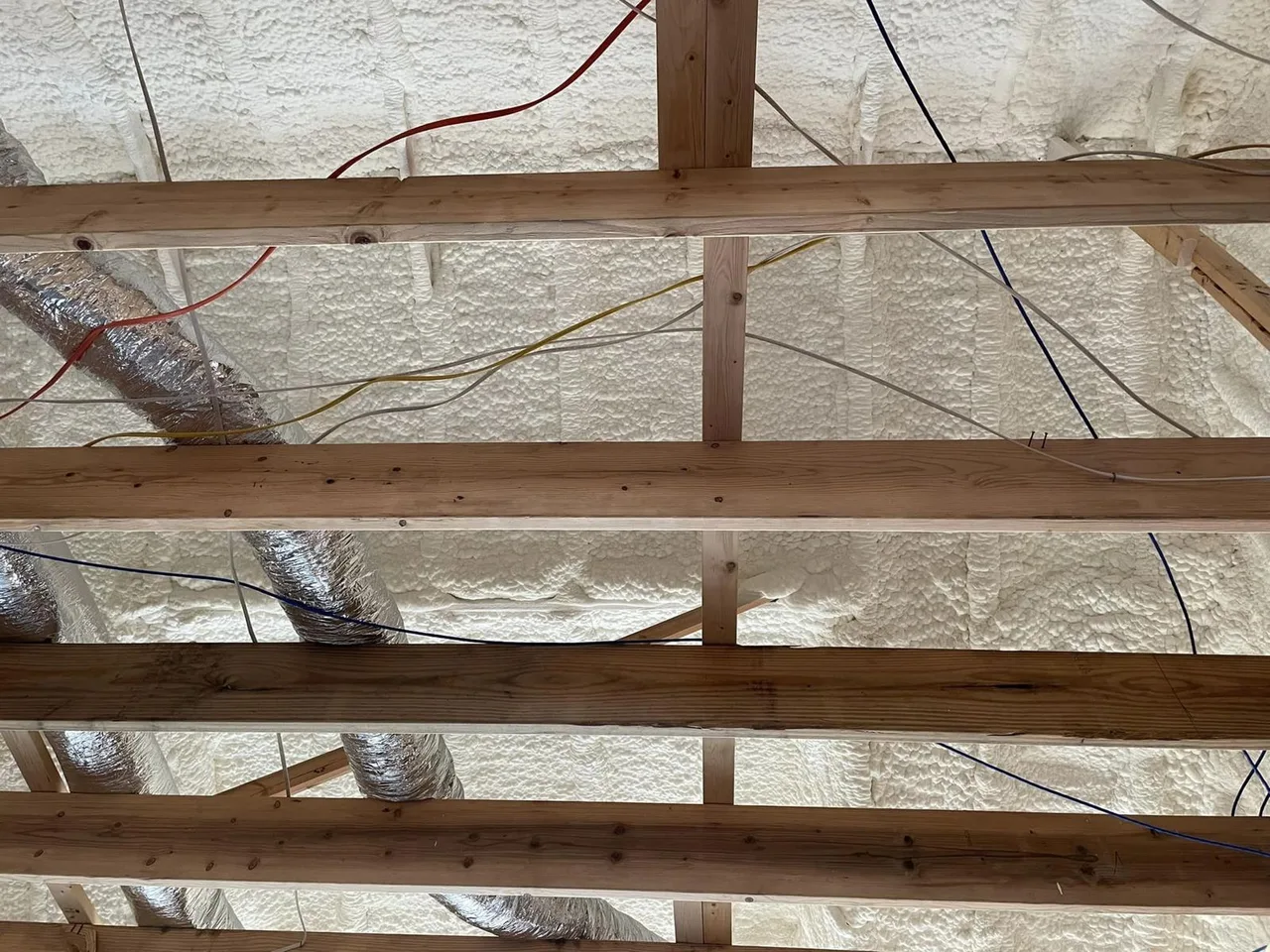
Depth measured and photographed where loose material went in. Consistent thickness across a roof deck where foam was applied, including the awkward runs at the eaves where coverage slips most easily. Baffles in place where airflow has to be maintained. The attic hatch sealed and insulated. Penetrations sealed before anything was laid over them.
Questions
Common questions
Is spray foam or blown-in better for a Hamilton attic?
On an open, empty attic both work. Foam at the roof deck also air seals, which matters a great deal where the attic is finished or holds ductwork.
Do you remove the old insulation first?
Only where it is damp, settled well below its depth or contaminated. If what is there is dry and sound, topping up is often the better value and we will say so.
My third floor is finished. Can it be insulated?
Yes, and it usually needs foam at the roof line rather than material on a floor, because the conditioned space already extends into the roof.
Want to know what your project would cost?
Tell us about the property and we'll help you determine the next step.
Free written estimates • No obligation • Local team